Cost of Tile Shower Remodel: A 2026 Pricing Guide
Tile-only shower work averages about $2,700 nationally, while a full tile shower remodel usually lands between $7,000 and $12,000 and can climb past $20,000 on custom builds.
July 29, 2026 · 13 min read
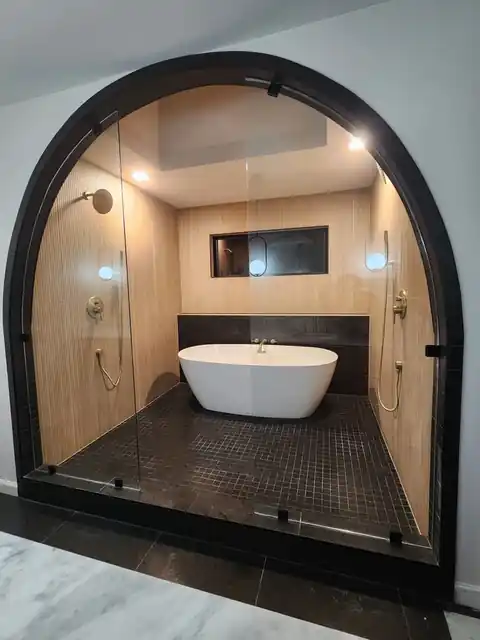
Tile-only shower work averages about $2,700 nationally, while a full tile shower remodel usually lands between $7,000 and $12,000 and can climb past $20,000 on custom builds. That gap is the whole story, because the price is driven less by the tile you can see and more by the work hidden behind it.
What a Tile Shower Remodel Actually Costs in 2026
A tile-only shower retiling job and a full shower remodel are not the same purchase, even if the finished wall looks similar. Angi's current pricing puts shower tile work at about $2,700 on average, with most projects landing between $1,800 and $5,000 when you're replacing tile, setting materials, and labor in a fairly standard scope (Angi shower tile cost guide). HomeLight's range for shower retiling is broader, at $1,436 to $3,725, with standard new tiled showers often around $2,700 and premium projects reaching $15,000 to $20,000+ when the design and finishes get more elaborate.
The reason both numbers can be honest is simple. A retiling quote may only cover the surface work, while a remodel quote can include demolition, waterproofing, substrate repair, plumbing corrections, and glass. That is why homeowners see one estimate near a few thousand dollars and another that looks like a different project entirely.
Four common price brackets
- Tile-only retiling. You keep the footprint, keep most of the plumbing, and replace the visible tile surface.
- Standard shower remodel. You're likely rebuilding the shower base and walls, and possibly replacing the enclosure.
- Mid-range custom work. The shower starts to include upgraded glass, a niche, better tile, or a layout change.
- Luxury walk-in build. The project may involve premium materials, custom glass, and more complex waterproofing and finish work.
Practical rule: if a bid doesn't clearly say whether it includes demolition, waterproofing, and glass, you're probably not looking at a full comparison.
A homeowner comparing quotes should use one sentence as the filter. Your final price is set less by the tile you choose and more by what's behind the tile and what surrounds it.
Anatomy of a Tile Shower Build
A tile shower is built from the inside out, and each layer protects the one below it. If a quote lumps everything into “labor,” the homeowner still does not know whether the contractor priced real waterproofing, basic finish work, or both. That hidden structure matters because a shower is a wet assembly, not just a finished wall.
The build starts at the studs
Demo to the studs removes the old tile, mortar, and damaged board so the installer can inspect framing and plumbing before anything new goes in. Oakwood Remodel's replacement guide puts demolition at $900 to $2,500, which is a good reminder that tear-out is real labor, not a throwaway line item. If the framing is out of square or the plumbing needs correction, the budget rises before any tile gets installed.
That is one reason a shower replacement quote can jump fast. A contractor may open the walls and find water damage, uneven studs, or drain issues that have to be fixed before the new tile work can start. Those corrections do not show up in a clean showroom estimate, but they show up on the job.
The wall system does the waterproofing work
Cement backer board or another proper substrate gives the tile a stable base, and the waterproofing membrane keeps moisture out of the structure. Oakwood's guide places backer board plus waterproofing at $800 to $2,200, which is why this layer should never be treated like an optional upgrade. Skip this layer, and the shower may look fine until water gets where it does not belong.
The finish layers come next. Thinset holds the tile, grout fills the joints, and sealant closes gaps at transitions. Tile installation itself is where a lot of homeowners expect the money to go, but the cost often sits in the preparation and the labor required to build the base correctly.
A full shower rebuild usually also includes decisions about enclosure type, valve work, and finish details that do not exist in a simple tile-only reface. For a contractor-facing breakdown, the bathroom remodeling service details help show what a full shower rebuild typically includes versus a cosmetic refresh.
Labor is dominant on tile showers because the wall has to be built, waterproofed, tiled, grouted, sealed, and finished in sequence. Tile is visible. The assembly behind it is what keeps the project from failing.
Breaking Down Materials, Labor, and Waterproofing
A shower quote reads best when materials, labor, and waterproofing are split into separate lines. Contractors do not always price them the same way. Some bundle everything into one total, while others itemize each phase. That difference matters, because two bids can land near the same headline number and still buy very different work behind the tile.
Materials cover more than tile
Installed ceramic or porcelain shower tile often lands around $17 to $25 per square foot, and that figure usually reflects more than the tile itself. It also includes the setting materials and related components needed for a proper install. In practice, the materials bucket usually covers tile, thinset, grout, sealant, backer board, and the waterproofing-related supplies that support the assembly.
Material choice matters, but it does not control the budget by itself. Ceramic is often the easier option on cost, porcelain usually brings better durability, and natural stone adds complexity because it asks for more careful installation and more maintenance later. Once the design gets bigger, every material choice gets multiplied by labor, cuts, and finishing time.
Labor is where the bill moves fastest
Labor is where quotes start to separate. On many jobs, the tile-setting portion alone can run from $3,000 to $8,000, and that does not capture every finish task in a more complex shower rebuild. That number also has to absorb demolition, substrate correction, plumbing adjustments, and enclosure installation when the scope calls for them.
A homeowner can pick the same tile and still get a very different price depending on the condition of the walls and the amount of correction needed. If the framing is out of square, the drain needs attention, or the old shower has to be taken down to the studs, labor grows fast. That is where a tile-only retile starts to look very different from a full shower remodel.
Waterproofing should never be buried in misc
Waterproofing commonly lands around $800 to $2,200, and it needs its own line because it is not the same work as tile setting or finish carpentry. If a contractor says waterproofing is “included” but does not name the membrane system or describe the substrate prep, ask for details before signing. The cheapest-looking bid often leaves out the part that protects the structure.
The price gap usually comes from the hidden work, not the tile itself. A homeowner comparing bids can use the tile installation pricing guide to check whether the quote covers a full shower assembly or only the visible surface.
Budget vs Mid-Range vs Premium Shower Scopes
A shower budget makes more sense when it's tied to scope, not just to tile quality. One homeowner wants a clean update that works every day. Another wants a spa-style shower with a custom layout and glass enclosure. Those are different projects, and they should be priced that way.
Budget scope
The budget tier is the most straightforward. It usually keeps the existing footprint, uses practical materials, and avoids moving plumbing unless something already failed behind the wall. In many homes, that means a basic tub-to-shower conversion or alcove retile with porcelain tile and a framed glass door.
- Typical range: $3,000 to $7,000
- What pushes it up: demo surprises, small plumbing fixes, upgraded door hardware
- What keeps it down: simple layout, standard-size tile, limited custom carpentry
A budget shower looks affordable only when the structure underneath is sound. If the shower pan or wall system is compromised, the low tier disappears quickly.
Mid-range scope
Mid-range showers are where homeowners usually start asking for design details that make the space feel custom without going fully luxury. That often means a walk-in layout, larger-format porcelain, a frameless glass enclosure, and a built-in niche.
- Typical range: $8,000 to $15,000
- What pushes it up: more tile cuts, more glass, more finish labor
- What keeps it down: staying within the existing wet area and keeping plumbing in place
This is the range where craftsmanship starts to matter as much as material choice. The tile can be beautiful, but the layout has to be planned well or the shower feels cramped and expensive.
Premium scope
Premium projects are about more than surface finish. They often include custom natural stone, a curbless entry, multiple showerheads, body sprays, and bench seating. Those features require more labor, more coordination, and more waterproofing detail than a standard shower.
- Typical range: $18,000 to $30,000+
- What pushes it up: custom glass, specialty plumbing, niche detailing, bench framing
- What keeps it down: fewer custom cuts, simpler plumbing, standard enclosure geometry
The smartest way to compare these scopes is to ask what the homeowner wants the shower to do every day. A guest bath may only need durability and cleanliness. A primary bath often justifies the higher-end finish work because it gets used constantly.
Add-Ons That Increase the Final Bill
Some shower upgrades do not look expensive on a selection sheet, but they add labor and coordination fast. The price change usually shows up after framing, plumbing, or glass work gets added to the scope. A shower that starts near $7,000 can move into a much higher range before the tile is even installed.
Small features with real cost impact
- Built-in niches. They require framing, waterproofing, and extra tile work. Ask whether the niche is framed into the wall or added as a separate box.
- Benches. A bench means more structure, more waterproofing detail, and more tile cuts. A floating bench is a different job from a fully built-in seat.
- Frameless glass enclosures. Oakwood Remodel places frameless or semi-frameless glass at $1,200 to $3,500, and that line item can move the whole project budget.
- Multiple showerheads and body sprays. These need plumbing planning, valve work, and careful layout so pressure and placement make sense.
- Heated floors. They add another system under the finished surface, so they should be priced as a separate electrical and tile layer.
- Curbless or linear-drain entries. These demand tighter pitch work and more detailed waterproofing than a basic curb.
Ask the right question before you sign
The best question is not, “Can you add this?” It is, “What does this add change in the framing, plumbing, waterproofing, or glass work?” That question forces the quote to reflect the actual job instead of just the visible finish.
If the shower is for a primary bathroom, the add-ons that usually earn their keep are the niche, the better glass, and the layout details that make the space easier to clean. In a guest bath, many of those upgrades are optional, not necessary. Spend where daily use justifies it, not where a showroom photo makes it look impressive.
Why the Cheapest Quote Often Costs the Most
The cheapest shower quote is often missing scope, not magically more efficient labor. That's why it can become the most expensive project after the first leak, crack, or change order. A homeowner who only compares the bottom line is usually comparing complete work against partial work.
What low bids often leave out
The most common omissions are predictable. A contractor may skip a true waterproofing membrane, substitute a weak substrate, or price demo as if only the tile is coming off, not the full assembly underneath. Another common trick is to leave glass and plumbing corrections vague, then issue change orders after the shower is already open.
Warning sign: if the quote sounds dramatically lower than every other bid, it usually means something important was left out.
A poor waterproofing choice is the biggest long-term risk because it can lead to hidden mold, rot, and structural damage. A bad substrate choice can also cause tile movement and cracking. Once those failures start, the homeowner isn't paying for improvement anymore, they're paying for remediation.
What a realistic bid should show
- Demolition scope. It should say whether the shower is coming down to studs or only being resurfaced.
- Waterproofing method. It should name the membrane approach and the base prep.
- Plumbing allowances. It should state what happens if valves, drains, or rough-ins need correction.
- Glass scope. It should identify whether the enclosure is included or excluded.
- Change-order rules. It should explain how unforeseen substrate damage is priced.
The point isn't to chase the highest bid. It's to make sure every bid is pricing the same work. A quote that is a little higher but includes real waterproofing, proper demo, and clear finish details is often the better value than a low number that gets rewritten once the wall opens up.
Building a Realistic Shower Remodel Budget
A solid budget starts before the first tile is picked. On real jobs, the number goes off track when homeowners shop finishes first and only price the hidden work after the wall is open. That is how a tile-only retile stays in one range, then a full shower remodel jumps once demolition, waterproofing, glass, and plumbing corrections enter the scope.
Use a phased budget process
Start with a target budget, then test that number against the actual scope on site. If the shower needs hidden plumbing work, substrate repair, or a full tear-out to studs, leave room for contingency so the project does not stall the moment the old shower comes apart. A contractor with a design-build process can help line up the scope before build day starts, and that is the kind of structure homeowners should ask for when they compare bids.
Lock the quote to the scope
The quote should spell out the line items clearly, especially where hidden work is concerned. If it does not, ask for a revision before signing. The most useful budgets separate the must-haves from the nice-to-haves, because the nice-to-haves are where the final price usually climbs.
A quote that names demolition, waterproofing, glass, and plumbing corrections gives you a real basis for comparison. A lump sum without those details can look lower at first, then rise fast once the shower is opened and the missing work appears. That gap is where a shower remodel budget guide helps homeowners compare scopes instead of just comparing totals.
A realistic budget is not the cheapest number you can get. It is the number that still works after the wall opens and the real condition of the shower shows up.
Key Takeaways for Planning Your Tile Shower Remodel
A tile shower project can look like a small finish upgrade, then the quote shows the opposite. Once you account for demolition, waterproofing, plumbing corrections, glass, and the labor needed to rebuild the shower correctly, the budget often shifts far beyond the tile line alone. That gap is why a surface retiling and a full shower remodel belong in different price bands, as outlined in the Angi shower remodel cost guide.
The part that catches homeowners off guard is the hidden work behind the finished surface. Tile is visible, but the backer board, membrane, slope, curb, and drain details are what keep water where it belongs. If those layers are damaged or outdated, the price rises because the job is no longer a cosmetic update.
Three rules hold up on most bids:
- Price the structure, not just the finish. Backer board, waterproofing, and drain details matter as much as the tile you see.
- Separate retiling from remodeling. Retiling means a narrower scope, while a remodel can pull in demolition, repairs, and plumbing changes.
- Leave room for surprises. Once the old shower is opened, hidden rot, soft framing, or bad waterproofing can change the scope fast.
A quote is easier to trust when it lists what the money covers. Demolition, waterproofing, glass, and plumbing corrections should be called out clearly, because those are the items that usually push a job from the lower end of the range toward the higher end. A lump sum can look fine on paper, then climb quickly after the walls come off and the actual condition of the shower is exposed.
If you are comparing bids, compare the work line by line, not just the bottom number. That gives you a cleaner read on whether the contractor is pricing a true rebuild or just a fresh tile surface. A realistic budget is the one that still holds up after the shower is opened and the actual condition of the assembly is known.
If you want a clear, scoped conversation about your shower project, Home Pro's Remodeling & Repairs can help you map the work before it turns into a surprise. Visit Home Pro's Remodeling & Repairs to ask about a tile shower remodel, review your options, and get a quote that matches the scope of the job.
Home Pro's Remodeling & Repairs, (903) 920-2969
Call (903) 920-2969More articles
7 Best Outdoor Kitchens: Designs, Costs, and Build Tips
Many outdoor kitchen problems begin on day one, when the layout, cover, and utility routes get decided before anyone looks closely at the budget.
Bathroom Vent Through Wall: Complete DIY Installation Guide
You've just stepped out of the shower on a humid East Texas morning.