Home Improvement Loans: A Practical Funding Guide
A roof starts leaking the same month your kitchen cabinets finally give up.
September 26, 2026 · 12 min read
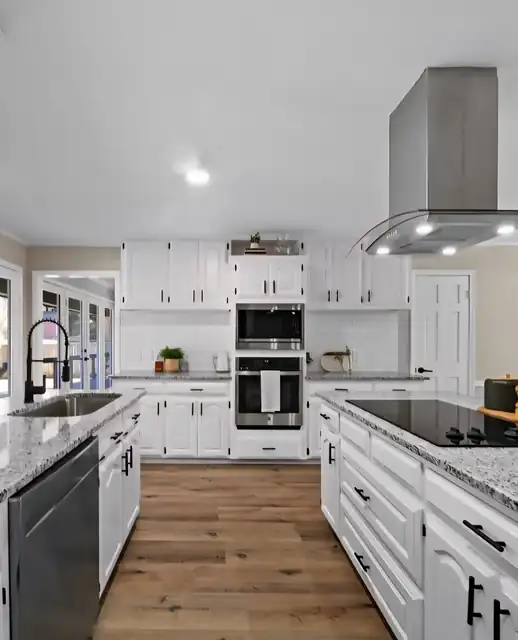
A roof starts leaking the same month your kitchen cabinets finally give up. You've got a rough remodeling number, a mortgage with a manageable payment, and some equity in the house, but not enough cash to handle every project comfortably. The tempting answer is to borrow once and fix everything. That can be sensible, or it can turn a repair into a long, expensive obligation.
Home improvement loans work best when the financing matches the project, the home's usable equity, and the household's ability to absorb another payment. A small HVAC replacement shouldn't be financed the same way as a major addition. A homeowner with limited equity shouldn't be pushed toward a product that depends on a high appraisal. And a borrower who's already stretched should know that approval friction can be much higher than online loan advertisements suggest.
A Common Decision Tyler Homeowners Face
A Tyler homeowner recently sits at the kitchen table with two estimates. The first is $25,000 for a kitchen remodel, enough to replace failing cabinets, update the counters, and make the cramped layout work better. The second problem is harder to ignore: the roof on the 1990s ranch is about 18 years old and showing its age.
The house has roughly $40,000 in equity, not a large cushion after accounting for the existing mortgage and the lender's required loan-to-value limits. A HELOC could provide flexibility, but it would place the home behind the borrowing. A personal loan might avoid that lien, but the payment could be higher and the approved amount might not cover both phases.
That leaves three practical questions:
- Which project is urgent? A failing roof, active leak, unsafe electrical system, or broken HVAC generally comes before a cosmetic kitchen upgrade.
- How much cash can stay untouched? Draining savings to finish a remodel leaves no buffer for permits, material changes, or the next repair.
- Should one loan cover both phases? Combining projects can simplify payments, but it also means borrowing against work that may not start for months.
Contractor's rule: Borrow from a finished scope, not from a wish list. Until you know the roof condition, kitchen design, labor, materials, and contingency needs, you don't know how much financing you actually need.
Home improvement lending is a large but underserved category. Home improvement loans represented less than 1% of total mortgage originations and had a 44% overall denial rate, according to Urban Institute analysis of renovation financing. That means the first decision isn't “Which loan has the lowest advertised rate?” It's “What work must happen, what can wait, and which borrowing structure gives this household a realistic path to completion?”
What Home Improvement Loans Actually Are
A home improvement loan is money borrowed for a repair, renovation, addition, or property upgrade. The phrase covers several different products, so start by separating the loan's security, payment structure, and access to funds.
An unsecured personal loan doesn't use the house as collateral. The lender primarily evaluates credit history, income, existing debts, and the requested amount. You receive a lump sum and repay it through scheduled installments, usually at a fixed rate. If you miss payments, the lender can pursue collection, but the loan isn't secured by a lien on the property in the same way an equity product is.
A home equity loan or HELOC uses the home as collateral. A home equity loan provides a lump sum with a fixed repayment schedule. A HELOC acts more like a revolving credit line, allowing draws as project costs arise, with a payment that can change when the rate changes.
Match the structure to the work
Use a fixed lump sum when the contractor has defined the scope and price. That suits a roof replacement, bathroom remodel, or kitchen renovation with a signed estimate. Choose a revolving line when work will happen in phases or the final cost may develop as walls open and conditions become visible.
A secured product may offer more borrowing capacity, but it brings appraisal, title, and lien requirements. An unsecured product may move faster and protect home equity, but approval depends more heavily on the borrower's financial profile.
Contractor financing and lender-referral programs create another route. Some contractors connect homeowners with financing providers, while specialized lenders focus on rehabilitation or renovation projects. For readers comparing structured renovation programs, it can help to browse rehabilitation loan programs before assuming a standard personal loan is the only option.
The Main Financing Options Compared
No single product wins across every renovation. The right choice depends on whether the project is small and urgent, large and staged, or substantial enough to justify a mortgage-based structure.
HELOC
A HELOC fits a mid-sized or large project with uncertain timing, such as a kitchen remodel followed by a bathroom, exterior work, or an addition that will be completed in stages. The homeowner draws only what the project requires, which can reduce interest during the early phase.
The tradeoff is a variable rate and a lien against the property. Lenders usually want meaningful usable equity and will review the combined loan-to-value position, income, credit, and existing debts. A HELOC can be practical for a homeowner with strong equity and stable income, but it's a poor fit when the budget is already tight or the home's value leaves little borrowing room.
Home equity loan
A home equity loan is better when the project has a firm price and the homeowner wants one predictable payment. It suits a substantial roof replacement, whole-house renovation, or defined addition where the contractor's estimate is unlikely to change dramatically.
The loan is secured by the house, so the lender can offer a structure that may be more suitable for larger work than an unsecured personal loan. The homeowner must accept the appraisal, title work, closing process, and property risk.
Cash-out refinance
Cash-out refinancing replaces the current mortgage with a larger mortgage and releases the difference for the project. It makes the most sense when the homeowner wants one mortgage payment and the new mortgage terms are acceptable.
It makes less sense when the existing mortgage rate is attractive and refinancing would replace it with a materially less favorable loan. It also spreads renovation borrowing across the mortgage structure, which can extend repayment of project costs far beyond the useful life of the improvement.
Personal loan
An unsecured personal loan is my usual first look for a small project under $25,000, especially when speed matters and the homeowner has strong credit. It can fund a roof repair, HVAC replacement, flooring work, or a modest bathroom update without an appraisal or lien.
The payment is typically fixed, which makes budgeting easier. The lender may cap the amount, charge a higher rate than a secured product, or require stronger credit when the borrower has limited equity.
FHA 203(k)
An FHA 203(k) is designed to combine renovation costs with mortgage financing. It can make sense for a buyer purchasing a home that needs work, or for an owner whose project is large enough to justify a government-backed renovation structure.
The Standard version is the more appropriate consideration for major rehabilitation. Expect more paperwork, contractor documentation, plan review, and lender controls over renovation draws. This isn't the quick option, but it can help when limited equity makes conventional equity borrowing unrealistic.
Contractor financing
Contractor financing can fit a smaller project or a borrower who can't qualify through a traditional bank. The contractor or a lending partner may offer a payment plan tied to the project.
Read the agreement carefully. Compare the total repayment, deferred-interest language, fees, early payoff terms, and what happens if the job changes. For specialized renovation or investment work, homeowners may also compare providers that advertise ways to get funded fast for rehabs, although an investor-focused product may not fit an owner-occupied remodel.
Who Actually Gets Approved
Approval is where many homeowners discover that a product's description doesn't match their situation. A lender doesn't assess only the project. It evaluates the borrower's income, credit profile, debt load, property value, current mortgage, and the amount of risk created by the new debt.
The access problem is especially serious for lower-income and lower-income-tract borrowers. HMDA-based analysis reported a 45.5% denial rate for home improvement loans in low-income tracts in 2025, compared with 26% in upper-income tracts, and a 50% denial rate for low-income applicants compared with 21% for upper-income applicants in the same analysis, as reported by the Urban Institute. Those figures explain why a guide that only lists loan products fails homeowners who have weaker credit, lower income, or little equity.
What secured lenders inspect
A HELOC or home equity lender calculates available borrowing from the property's appraised value, the existing mortgage balance, and the lender's maximum combined loan-to-value policy. The lender also reviews income documentation and debt-to-income ratio. A homeowner may have 20% equity on paper and still receive a smaller line, a higher rate, or a denial if income is inconsistent or existing debts consume too much monthly income.
Unsecured personal lenders usually move faster because they don't need an appraisal or title search. They compensate by relying more heavily on credit, income, and payment history, and they may limit the amount available to a borrower with weaker qualifications.
Don't confuse a minimum with an approval
There is no universal credit cutoff, equity threshold, or debt-to-income limit across all lenders. Advertising a single “minimum score” can mislead homeowners because lenders apply different overlays, loan sizes, property rules, and documentation standards.
For a stronger application, pay down revolving balances where possible, correct reporting errors, document stable income, and request only what the scope requires. A practical checklist of lender approval odds tips can help organize those steps, but it can't replace a lender's underwriting decision.
How the Application Process Works
The application path differs sharply between an unsecured personal loan and a product secured by the house. The cleanest process starts with the project estimate, not the loan application.
1. Prequalification
Begin with lenders that offer prequalification using a soft credit inquiry. You provide basic information about income, debts, the property, and the requested amount. The result is an initial indication, not a commitment.
Compare the estimated payment and total repayment before authorizing a formal application. Don't apply everywhere at once. Pick the products that fit the project and your financial position.
2. Formal application
The formal application generally triggers a hard credit inquiry. You'll provide pay stubs, tax returns when requested, mortgage statements, insurance information, identification, and details about the project.
Personal lenders focus on income and credit. Equity lenders add property information because the house secures the debt. FHA 203(k) underwriting also requires a defined renovation plan and qualified contractor documentation.
3. Underwriting and property review
A HELOC or home equity loan usually requires an appraisal or valuation, title search, lien review, and insurance verification. The lender wants to confirm that the property supports the requested borrowing and that no title issue blocks the lien.
Primary-residence equity loans generally include a three-day right of rescission after closing. Ask the lender exactly when the period begins and when funds can be released.
4. Approval and funding
Once approved, review the rate, term, payment, fees, draw rules, and collateral conditions. A HELOC may fund after title and recording requirements are complete. A personal loan may deposit directly into your account, while a renovation mortgage can release money through controlled draws.
FHA 203(k) projects require additional coordination among the lender, approved consultant where applicable, contractor, and borrower. The lender must review the bid, renovation plan, and project budget before closing.
5. Plan for the actual calendar
A personal loan can fund within a week when the application is straightforward. A HELOC commonly takes 30 to 45 days, while an FHA 203(k) closing typically runs 45 to 60 days. Those timelines matter when a roof leak, insurance issue, contractor schedule, or material order sets the start date.
Before requesting bids, use a detailed remodeling estimate checklist to organize scope, allowances, finishes, and exclusions.
Matching Loans to Real Project Scenarios
The project number should drive the financing conversation. The examples below use common decision patterns, but your contractor's estimate and lender's terms control the final choice.
Scenario one, an $8,000 roof repair or HVAC replacement
For an urgent $8,000 repair, speed usually matters more than squeezing out the lowest possible rate. A fixed personal loan can work if the borrower has strong credit and stable income. Contractor financing may be useful when the contractor can coordinate approval and the homeowner needs the work scheduled quickly.
I wouldn't put a small emergency repair through a cash-out refinance. The process is too heavy, and replacing the mortgage structure for a modest project usually creates unnecessary complexity. Ask for the complete project price, confirm whether the estimate includes disposal and permits, then compare the personal-loan payment with the contractor's written financing offer.
Scenario two, a $30,000 kitchen remodel with $60,000 in equity
A homeowner with $60,000 in equity has more choices, but that doesn't automatically make a HELOC the right answer. Suppose the homeowner draws $25,000 from a HELOC at 8.5% variable interest and compares it with a $25,000 home equity loan at 9.25% fixed interest over seven years. The HELOC may begin with a lower rate and allow staged draws, while the fixed loan provides a payment that won't change with the index.
At those stated terms, the home equity loan payment is approximately $407 per month, before lender-specific fees and insurance considerations. A fully drawn HELOC at the stated variable rate would be approximately $391 per month on an interest-only basis, but its payment structure and future rate can change. Don't compare those figures as if they were identical products. Ask whether the HELOC requires principal repayment during the draw period and how the payment changes afterward.
For a kitchen with a firm contract price, I generally favor the fixed home equity loan if the homeowner wants certainty. I favor the HELOC when the remodel will be staged or the final draw schedule is uncertain.
Scenario three, a $95,000 primary-suite addition with limited equity
A $95,000 addition is a different category. A small personal loan won't usually be the cleanest structure, and limited equity weakens the case for a conventional cash-out refinance.
An FHA 203(k) Standard may fit when the borrower can document income, work with an approved consultant, and accept the added plan-review and draw controls. A cash-out refinance may fit when the homeowner has enough equity, can accept the new mortgage terms, and wants one long-term payment. Neither product should be selected before an architect, designer, or contractor has established a defensible scope and budget.
Home Pro's Remodeling & Repairs offers onsite estimates and financing options, so a homeowner comparing these paths can establish the construction number before choosing the borrowing structure. For another cost-sensitive project, review the planning factors in how much an outdoor kitchen costs before treating a broad online estimate as a loan target.
Choosing Your Next Move
Before you apply, answer three questions in writing.
- How much equity is usable? Subtract the current mortgage and the lender's required cushion from a realistic property value. Paper equity isn't the same as borrowable equity.
- What payment can the household absorb? Use the payment after taxes, insurance, utilities, existing debts, and a repair reserve. If the payment only works in a perfect month, the project is too large or the term is too short.
- Does the work justify borrowing against the home? Safety repairs and essential systems deserve priority. Cosmetic upgrades should earn their place through daily usefulness, long-term plans, or a clear property strategy.
The next move is not a loan application. It's an onsite estimate that identifies the scope, schedule, allowances, and total price. Once you know whether the project is an $8,000 repair, a $30,000 remodel, or a $95,000 addition, you can compare unsecured borrowing, equity products, renovation mortgages, and contractor financing without guessing.
For Tyler and East Texas homeowners, an onsite conversation with contractors serving Tyler, Texas can establish the construction side before the lender reviews the financial side. That order protects you from borrowing too little, borrowing too much, or starting work without enough money to finish.
Home Pro's Remodeling & Repairs provides design-build remodeling, roofing, repairs, additions, and exterior improvements, with free onsite estimates and financing options for qualifying projects. Visit Home Pro's Remodeling & Repairs to schedule an estimate, define the work, and discuss a financing path based on the actual project cost.
Home Pro's Remodeling & Repairs, (903) 920-2969
Call (903) 920-2969More articles
7 Best Outdoor Kitchens: Designs, Costs, and Build Tips
Many outdoor kitchen problems begin on day one, when the layout, cover, and utility routes get decided before anyone looks closely at the budget.
Bathroom Vent Through Wall: Complete DIY Installation Guide
You've just stepped out of the shower on a humid East Texas morning.