Tile Shower Remodel Cost: What Homeowners Actually Pay
$2,700 is the average tile shower remodel cost in 2026 for tiling alone, and the typical national range runs from $1,800 to $5,000.
July 28, 2026 · 10 min read
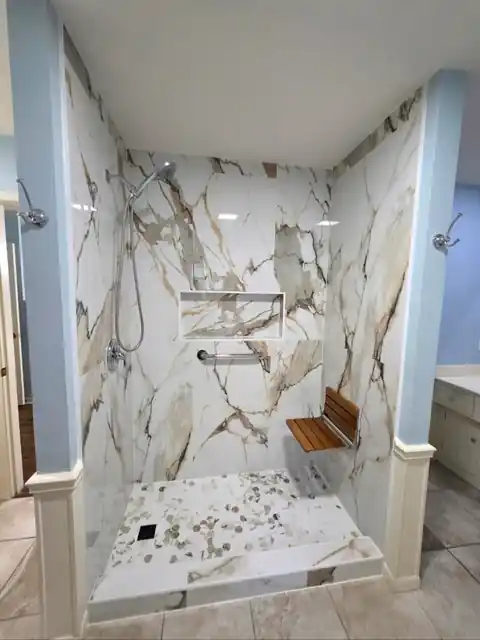
$2,700 is the average tile shower remodel cost in 2026 for tiling alone, and the typical national range runs from $1,800 to $5,000. Once you bring in waterproofing, plumbing, glass, and structural work, a full shower remodel commonly lands between $8,000 and $22,000.
That's the number most homeowners don't hear until the first quote arrives and the sticker shock hits. A shower that looked like a “simple retile” on paper can turn into a much bigger job the second the old tile comes off the wall.
Understanding the Actual Tile Shower Remodel Cost
The first quote usually lands higher than expected because homeowners price the visible work and miss everything buried behind the tile. You see tile, a shower pan, and a glass door. The contractor sees demolition, substrate repair, waterproofing, plumbing trim-out, and a finish package that has to hold up under daily water exposure.
The national baseline gives you a starting point, not a final number. HomeAdvisor's 2026 shower-tiling guide puts professional shower tiling at $1,800 to $5,000, with a $2,700 average for a standard bathroom project, and Angi reports the average cost to tile a shower at about $2,700. Thumbtack's 2026 data place the national range at $1,436 to $3,725, with the typical homeowner spend at $2,314. The spread is normal because project scope changes fast with square footage, tile type, demolition, and labor.
Why one shower quote can look nothing like the next
A small shower with a clean tear-out can stay near the low end. A larger shower, a custom niche, or a tougher demolition pushes the number up fast. One 2026 guide estimates shower retiling at $25 per square foot, with old-tile removal adding $1.50 to $4.50 per square foot, which is why two bids can differ even when the tile sample board looks similar. HomeAdvisor's 2026 shower-tiling guide makes that gap clear.
Practical rule: If the estimate only talks about tile, it is incomplete. Prep, waterproofing, and finish work often hide the biggest swings in cost.
A full bathroom remodel that includes a tile shower commonly lands between $8,000 and $22,000, and many markets cluster around $12,000 to $15,000 according to 2026 pricing guides. That is the range to keep in mind if your shower is more than a simple cosmetic refresh. Design Transition Studio's 2026 bathroom remodel guide shows how quickly a shower becomes part of a broader bath budget, not a standalone tile job.
Where Your Money Actually Goes in a Tile Shower Project
A smart bid breaks the shower into layers, because the tile itself is only one of them. Standard porcelain installation commonly prices at about $18 to $28 per square foot for the installed tile portion, while designer tile or intricate patterns add $5 to $12 per square foot on top. That's a useful benchmark, but it's not the whole bill.
The line items that make or break the total
A complete shower remodel example totaled about $14,000, with roughly $1,200 for waterproofing, $1,500 for plumbing rough-in and trim-out, $2,800 for tile labor, and $2,400 for a frameless shower door. That breakdown shows the truth homeowners miss, the visible tile is only one cost layer among many. Soto Bay's construction sequence guide lays out that kind of technical split clearly.
Labor is the heavy hitter. A 2026 cost guide puts labor at 40% to 65% of a typical shower remodel budget, which is why a quote can climb even when tile material prices stay reasonable. The work is skilled, slow, and exposed to risk. If the installer gets one slope wrong or one waterproofing seam wrong, the whole shower pays for it later.
Here's the practical version in table form.
A clean bid should show these pieces separately. If your contractor lumps everything into one vague number, you don't have enough detail to compare value.
Hidden Cost Drivers That Catch Homeowners Off Guard
Most cost guides stop at surface pricing, and that leaves homeowners exposed. The ugly surprises usually show up after demolition, when the old shower is gone and the contractor can finally see what has been hiding behind the wall.
What demolition reveals
Water-damaged backer board is the big one. Once tile comes off, rotted framing, compromised subfloor areas, or damaged substrate can force repairs that were never visible during the estimate. Plumbing changes can do the same thing, especially if the old valve, drain, or supply lines are not where the new layout needs them.
A project that looked like a $2,700 standard tiled shower can jump to $7,000 to $15,000+ once plumbing changes, custom glass, benches, or structural work enter the scope, according to Angi's shower remodel cost guide. That is the gap homeowners need to plan for before demo starts, not after.
If your shower has signs of past leaks, budget like there is damage behind the tile. If there is no hidden damage, you will be relieved. If there is, you will not be scrambling for money mid-project.
Curbless conversions deserve special attention. Moving to a curbless shower can add 20% to 30% because the subfloor has to be recessed. That is structural work, not an accessory upgrade, and the cost follows the carpentry. Angi's shower remodel cost guide calls that out plainly.
The hidden costs that do not look hidden on paper
Here is what usually drives a bid up after demo.
- Water Damage Behind Walls: Backer board, framing, and other wet-area repairs can turn a normal retile into a repair job.
- Outdated Plumbing or Drainage: Old valves and drains often need more than a cosmetic trim-out.
- Non-Standard Tile Sizes: Custom cuts and odd layouts create more labor than simple square tile fields.
A contractor who budgets for discovery is being realistic. A contractor who does not is hoping nothing bad turns up.
For a related example of how scope changes alter pricing, see Home Pro's Remodeling & Repairs deck building cost estimate.
Three Realistic Tile Shower Remodel Budgets
The right budget depends on what you're building, not what the showroom display makes you want. A basic retile, a full shower replacement, and a custom walk-in shower are three different jobs with three different price realities.
Basic retile
This is the leanest version. You keep the existing shower footprint, avoid plumbing moves, and choose standard ceramic or porcelain with a simple layout. For many homeowners, this is the right call if the shower works and just looks tired.
The realistic range for a standard shower enclosure with a full tile surround often lands around $1,500 to $3,500, while more involved tile installation pricing can push the project higher depending on demolition and disposal. Modernize's shower tile installation guide makes the geometry issue clear. If the enclosure is straightforward and the substrate stays sound, you're buying durability and a cleaner look, not a total redesign.
Mid-range upgrade
This is the most common full remodel path. You're looking at new waterproofing, updated fixtures, better tile, and a glass door. It's the sweet spot for homeowners who want the shower to feel new without turning the bathroom into a custom build.
A standard shower enclosure with a full tile surround typically lands around $1,500 to $3,500, but premium tile or larger walk-in formats rise to $3,000 to $7,000. Complete tile-and-glass replacement can reach $5,000 to $8,000 or more, and Modernize's cost guide notes custom shower tile labor around $8 to $10 per square foot. If the plumbing stays close to the original layout, many projects stay controllable.
High-end custom walk-in
The budget stops pretending here. Larger walk-in formats, premium tile, curbless construction, custom benches, niches, and glass all stack up. The price rises because the shower becomes a built system, not just a tiled box.
The high end can climb to $15,000 or more for a customized shower, and some premium remodels can reach $50,000 when the project includes a freestanding tub, a walk-in shower, and a double vanity. Angi's 2026 remodel guide ties those bigger numbers to bigger scope, not just fancier materials. If you want spa-level results, plan on paying for the structure that supports them.
One good reference point for related planning is this deck building cost estimate guide, since contractors often explain scope the same way across major home projects.
Smart Strategies to Control Your Tile Shower Remodel Cost
Cutting shower cost the wrong way is easy. You end up saving on the finish and paying for the failure later. The better move is to control scope, choose durable materials, and avoid changes that trigger extra labor.
Spend where the water lives
Keep waterproofing in the project even if you trim the tile selection. Water damage is the most expensive mistake a shower can make, and the cure costs more than the prevention. A clean tile face with a bad membrane is a future demolition job waiting to happen.
Use porcelain if you want the look of stone without paying for stone everywhere. Keep the shower footprint the same to avoid plumbing relocations. Choose a simpler glass setup if the layout doesn't need a high-end enclosure, because glass is one of the places where a quote can jump fast.
Make fewer design changes
Every new line, niche, bench, or custom feature adds labor. The most efficient projects are the ones where the contractor can build in a straight path. If you're chasing savings, don't move the drain unless you have a strong reason.
A few smart choices help:
- Keep the Existing Layout: Avoid plumbing changes unless the old layout is failing.
- Use Porcelain That Mimics Stone: You get the visual effect without the full material premium.
- Choose Simpler Glass: Semi-frameless can control cost better than a full custom look.
- Buy Smart on Tile: Overstock and remnant sources can help if you're flexible on pattern and color.
Homeowners who want a contractor to handle the design-build side can use Home Pro's Remodeling & Repairs as one option for coordinated bathroom remodeling in East Texas, especially when the goal is to keep scope and budget aligned from the start.
The cheapest shower is the one you don't rebuild twice.
Phasing can help too. If the bathroom needs more than one upgrade, spread the work out instead of forcing every feature into one budget cycle. That's often a cleaner way to stay in control without lowering the quality of the actual wet-area build.
How to Evaluate and Compare Contractor Bids
A good shower bid is specific enough that you can compare it to another bid line by line. A bad one hides behind a single total and hopes you don't notice what's missing. If the estimate is thin, assume the final bill will grow.
What a real bid should show
Look for separate pricing for demolition, waterproofing, tile labor, plumbing trim-out, and glass. If the contractor gives you a lump sum without clarifying allowances, that's a problem. You're not buying a mystery box.
A strong estimate should also spell out what happens if hidden damage appears after demo. That contingency shouldn't be vague. It should be a discussion point before the first tile comes off the wall.
What to question right away
The lowest bid is not always the best value. If one number sits far below the others and the scope is thinner, the contractor may be leaving out work that will show up later as change orders. Missing waterproofing or plumbing trim-out line items are the biggest red flags.
Use this checklist when you compare estimates:
- Verify License and Insurance: You want a contractor who is covered if something goes wrong.
- Ensure Detailed Line-Item Pricing: Ask for materials, labor, and allowances separately.
- Confirm Project Timeline and Payment Schedule: The work should have a sequence, not a guess.
- Request and Contact at Least 3 References: Ask about communication, cleanliness, and change orders.
- Check for Manufacturer Warranties: Tile, glass, and fixtures should come with real product support.
The service page for bathroom remodeling is a good example of the kind of scope focus homeowners should ask for, because the estimate needs to match the actual shower work, not just the bathroom category label.
If a contractor resists detailed scope documentation, walk away. A clean bid protects both sides. A fuzzy bid creates arguments.
Planning Your Tile Shower Remodel with Confidence
Start with the baseline, not the optimistic one. $2,700 is a fair average for tiling alone, but the smarter planning range is wider once you account for waterproofing, glass, plumbing, and the possibility of hidden damage. If your shower is older, build in room for discovery from day one.
The best plan is plain: define the footprint, pick the tile class, ask what happens if demolition reveals damage, and compare bids on scope instead of just the total. If you're uncertain whether your project needs a permit, this permit guide for remodeling work is a useful starting point for thinking through that question before work begins.
A confident homeowner doesn't chase the lowest quote. A confident homeowner hires the contractor who explains where the money goes, what could change after demo, and how the shower will be built to last.
If you're ready to turn a rough shower idea into a bid you can trust, Home Pro's Remodeling & Repairs can help with bathroom remodeling, tile, showers, and the coordination that keeps the scope honest. Visit Home Pro's Remodeling & Repairs to talk through your shower project, compare options, and get a clear plan before demolition starts.
Home Pro's Remodeling & Repairs, (903) 920-2969
Call (903) 920-2969More articles
7 Best Outdoor Kitchens: Designs, Costs, and Build Tips
Many outdoor kitchen problems begin on day one, when the layout, cover, and utility routes get decided before anyone looks closely at the budget.
Bathroom Vent Through Wall: Complete DIY Installation Guide
You've just stepped out of the shower on a humid East Texas morning.